

Language shows how children are embracing their health
The latest Oxford University Press research reveals 'vitamin' as Oxford's Australian Children's Word of the Year 2025, as Australian children are writing about looking after themselves. Although it’s capability-focused, it does highlight our current obsession with being the "healthiest generation”.
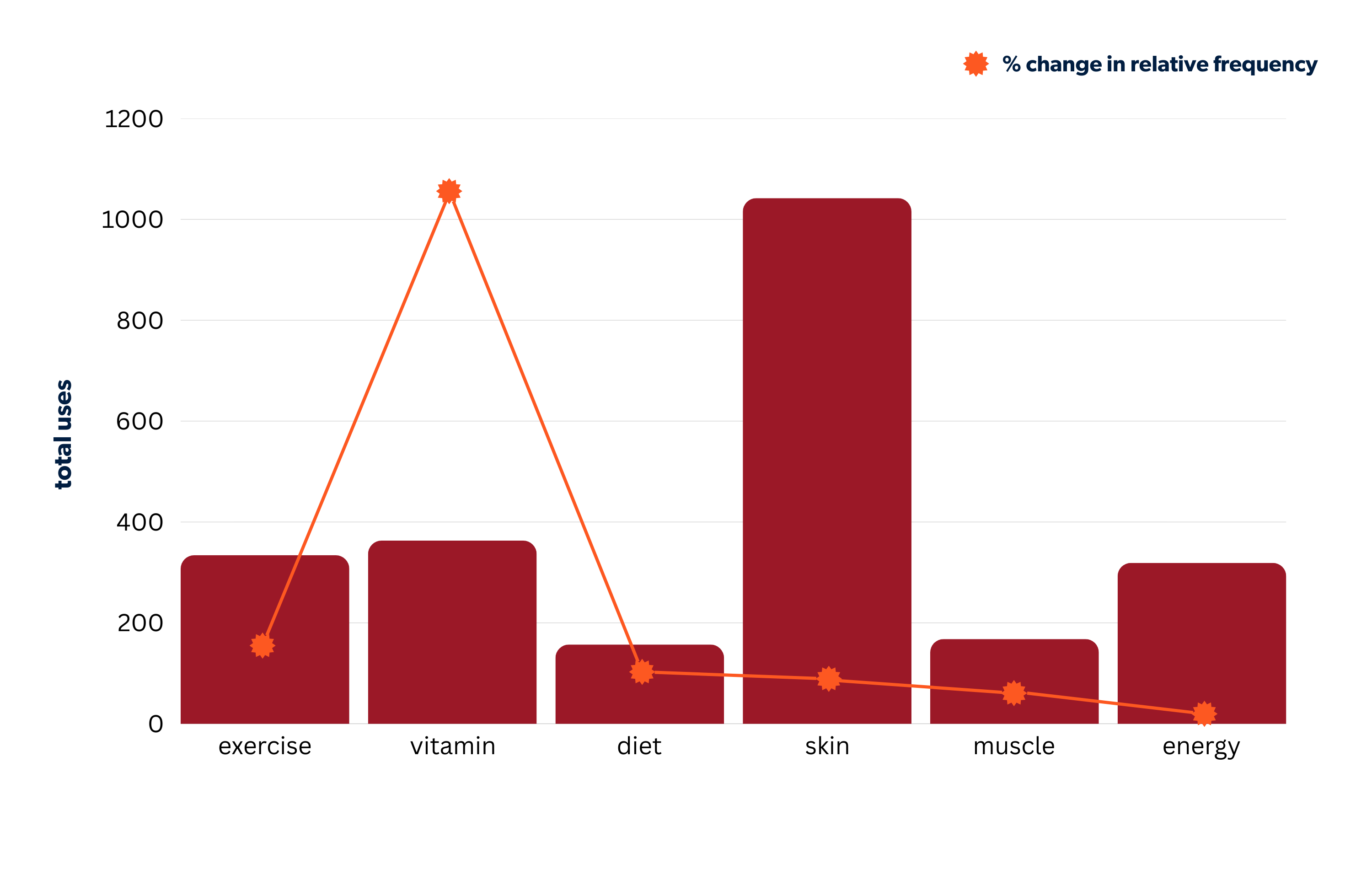
Based on over 3.4 million words (a 51% increase from 2024) from over 46,700 children’s stories (an 82% increase from 2024), OUP’s shortlist for 2025 paints a vivid picture of how strongly wellbeing language is landing with mostly mid- to late-primary school students across the country. The shortlisted words included: ‘exercise’, 'vitamin’, ‘diet’, ‘skin’, ‘muscle’ and ‘energy’, with five out of the six being used at least 127% more frequently than in 2024.
Together, the shortlist suggests children are actively absorbing messages about looking after themselves via school, family and the wider media/social media environment, and weaving those ideas into narratives about daily life, identity, routines and aspiration.
Trending Themes
-
Health
Students are writing about health and how important it is to look after yourself so that you grow up healthy and strong. They wrote about eating well, exercising and playing sport so that you can become fit, healthy and strong. Words such as “vitamin”, “exercise”, “energy” and “muscle” had an increase in frequency. -
Emotion and connection
Students are writing about their emotions and relationships, and the ways in which they connect with others. Words such as “love”, “teamwork”, “community” and “confidence” increased in frequency. But words such as “doubt” and “pressure” were also more frequent. The notable slang words that appeared in students’ writing related to how students may perceive each other and relate to each other, for example, “sigma”, “bff” and “bestie”. -
Society and learning
Students are writing about information and how they understand and digest it. Words such as “fact”, “opinion”, “research” and “exploration” increased in frequency, which could be a result of the current media and social media landscape. Students get most of their information about society from social media, which often raises the question about whether something is factual or not. -
Animals/Environment and nature
Pollution and the environment continue to be topics that students are concerned with, particularly the impact on animals and the ocean. Words such as “ecosystem”, “adaptation”, “pollution”, “recycling” and “extinct” increased in frequency, which suggests an interest in how ecosystems and animals adapt and survive in the students’ writing.