Home  >  Dictionaries 
Your cart Bookmark this page Print this page
callithumpian - 1. (often used to indicate a lack of adherence to any religion) a member of an unspecified nonconformist religious sect. 2. (often used to indicate a lack of adherence to any political party or creed) a member of an unspecified political party or creed; a holder of any unspecified belief.

The term is sometimes used as the equivalent of a generic ‘religious beliefs of any kind’. By the 1970s, callithumpian broadened from its earlier religious focus, and came to be used also to refer to beliefs (especially political) of any kind.

Read the full story >>

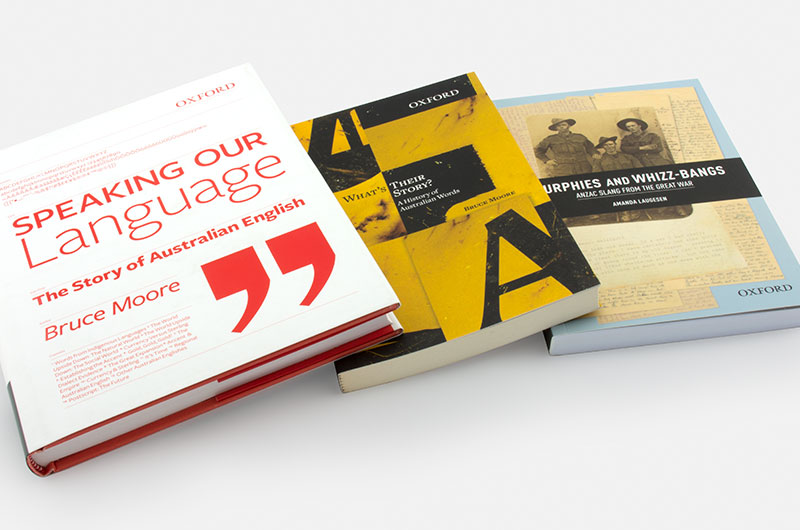
Speaking our Language - The story of Australian English

Speaking our Language is written for people who want to know where Australian English came from, what the forces were that moulded it, why it takes its present form, and where it is going.

The sub-title of this book, The Story of Australian English, derives in part from the chronological story that the book traces: the story begins with Joseph Banks and Captain James Cook collecting indigenous words such as kangaroo and quoll in northern Queensland in 1770, and it continues from there right up to the present day, when Australian English is firmly established as the natural and national language of Australia. It is a ‘story’ in another sense as well: the story of the development of Australian English is inextricably intertwined with the stories of Australian history and culture, and of the development of Australian identity.

Of all the markers of identity, language is by far the most significant. This language we speak, and which gives voice to our Australian identity, is not, however, a unifaceted thing. It is, as the book demonstrates, a multifaceted entity. Australian English is central to the process of giving voice to our Australian identity: in important ways, we are what we speak, and we are how we speak.

Speaking our Language
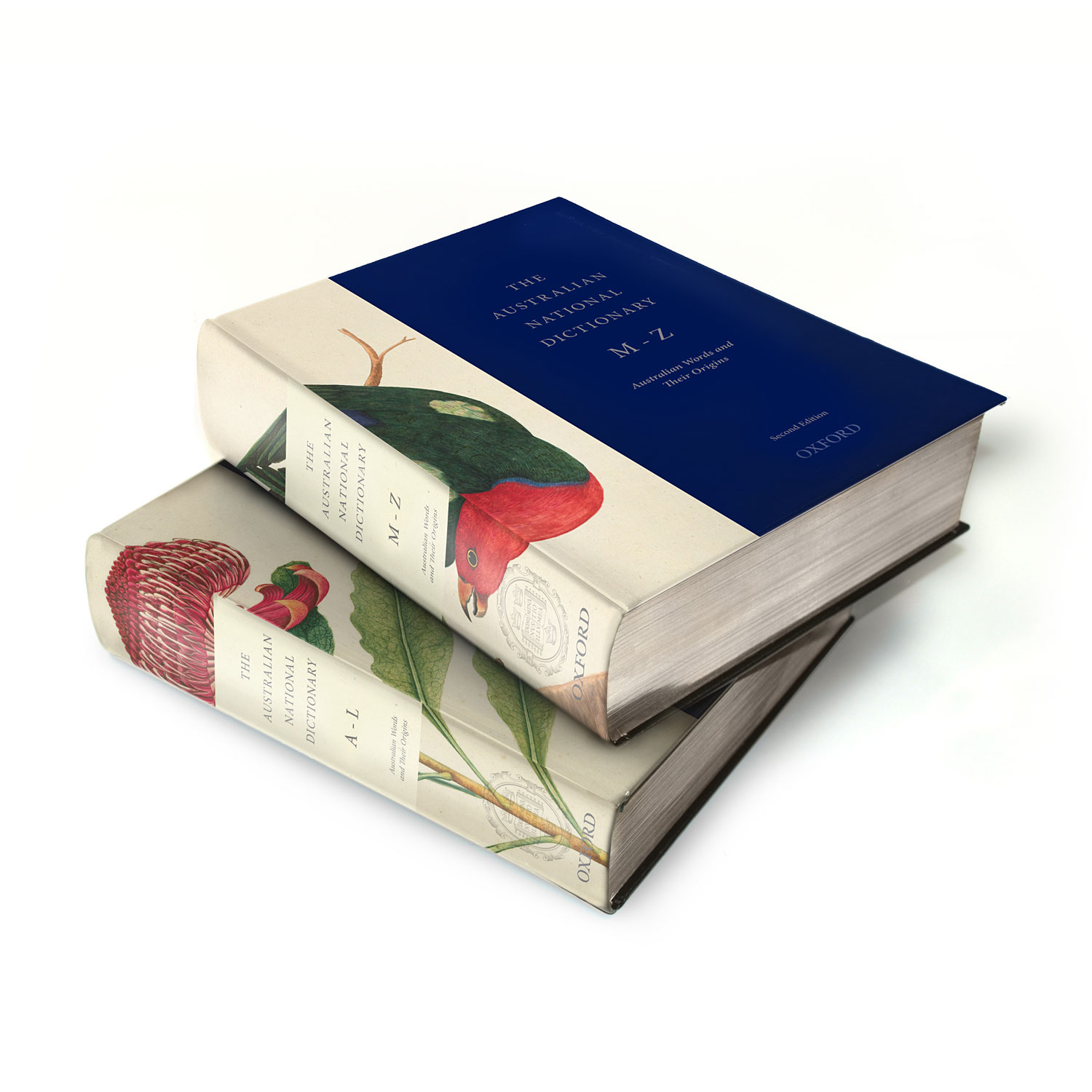
grew out of the research of the Australian National Dictionary Centre (ANDC) at the Australian National University. The Centre is named after the Australian National Dictionary which was first published in 1988, and which includes some 10,000 Australian words and meanings.

Since 1988, the Australian National Dictionary Centre has continued its research into the history of Australian words. The Centre is now busy finalising a second edition of the Australian National Dictionary, and expects to add about 4500 new words and meanings.


Link

Speaking our Language: The Story of Australian English

The latest from the Learning Exchange

Stunned Mullets & Two-pot Screamers Stunned Mullets & Two-pot Screamers

The history of Australian colloquialisms

Australian Word of the Year Australian Word of the Year

Find out more about the ANDC’s nominated Word of the Year for 2007

Defining Australian English Defining Australian English

For 20 years the ANDC has been researching Australian English.

Enter the Learning Exchange
DICT_TRADE_AND